Abstract
Does your leadership team follow the same security rules as everyone else, or are there special exceptions made for the executive suite? One of the most dangerous vulnerabilities in a business is the CEO who’s too busy to adhere to the multi-factor authentication policy or who insists on having administrative access to every file in the company. This is precisely why cybercriminals target high-level executives; the likelihood that they have access to data they shouldn’t is much higher than the average employee.
Your business’ cybersecurity culture must start at the top, and we’ll help you make it happen. Here are 3 non-negotiable pillars for business continuity and security (and why the CEO must set the standard for them to be effective).
Mandatory Multi-Factor Authentication for ALL Accounts
Your passwords are targets that hackers will do anything to hit, and for the CEO and other executives, this can be particularly catastrophic.
If you’re a member of leadership and your email is compromised, a hacker can authorize wire transfers, sign contracts, or leak sensitive board-level data. This is why mandatory multi-factor authentication is so important; it adds more layers of security during login. There should be ZERO exceptions to this rule, and leadership must make it abundantly clear that they endorse these policies as a method to protect the company and its reputation.
If your leadership team treats MFA as an accepted part of their day, then so too will your staff who might otherwise see it as an annoyance (or even a barrier to their work).
The Principle of Least Privilege
We get it, you want access to everything in your business, but this mentality is going to create a massive liability that’s hard to justify.
If your account has global admin rights and that account is breached, that hacker will have the keys to your entire business. Instead, we recommend you practice the principle of least privilege, which states that every person (including your executive staff) should only have access to the specific data they need to do their jobs. We also recommend you segment data into different silos, especially HR, finance, and client data, so one breach doesn’t lead to a total system lockout.
By limiting your own access to this important data, you can demonstrate that you value data integrity over executive convenience, and that goes a long way.
A Culture of Radical Transparency and Reporting
The third pillar is a mindset rather than a piece of software.
Most employees are afraid they will be reprimanded if they report a suspicious link, or worse, if they click on that suspicious link. Instead, companies should be publicly thanking employees for flagging any phishing attempts, even if they are false alarms. Businesses need to move in the direction of a no-blame environment, where employees feel empowered to report potential cybersecurity issues rather than withhold their concerns.
And yes, this goes for leadership as well; they should be actively participating in this “human firewall” and go through the same training as everyone else.
Business continuity is not a one-person responsibility; it’s in the hands of each and every employee on payroll, including the executives and leadership team. If you want to build a business that can withstand anything, reach out to NetMGM. We’ll use our IT expertise to level up your business continuity and cybersecurity strategies. Learn more today by calling us at 888-748-2525.
ABOUT THE AUTHOR
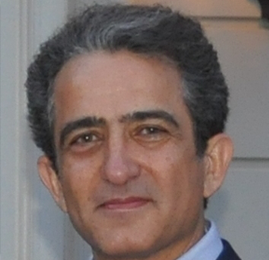
Rafiq Masri
With over 25 years of experience in Information Technology, Rafiq is one of the most accomplished, versatile and certified engineer in the field. He has spent the past 2 ½ decades administering and supporting a wide range of clients and has helped position Network Management, Inc. as a leader in the IT Managed Services space.
Rafiq has built a reputation for designing, building and supporting top notch IT infrastructures to match the business objectives and goals of his clients.
Embracing the core values of integrity, innovation, and reliability, Rafiq has a very loyal client base with some customer relationships dating back 20+ years.
Rafiq holds a bachelor’s degree in Mechanical Engineering from the University of Michigan and has completed graduate programs in Software Engineering and Business at Harvard and George Mason University. Rafiq is a former founder and CEO of Automation, Inc. in Ann Arbor, Michigan as well as a valued speaker on entrepreneurship and technology at industry events such as ExpoTech and others.