Abstract
If you pull back the curtains on IT, you’ll discover a deep dividing line between two completely different ways of managing technology. On one side is the reactive model, otherwise known as break-fix IT, and on the other, you have the proactive model, which is what we embrace with managed services. While both technically exist, only one is still relevant today, and that’s the managed methodology.
Let’s take a look at what makes proactive, managed IT so valuable for today’s businesses and how it all actually works.
The Anatomy of a Reactive Failure Loop
The reactive model of IT is simple: something breaks, you call a technician, they fix it, and you get billed.
This system hides a structural flaw. In a reactive framework, the IT provider has zero incentive to keep your business from suffering. That’s how they make their money. And since they only get paid when they spend time fixing your business’ systems, they have no time or reason to prevent the next crash.
Your business is trapped in a permanent loop of crisis, temporary patch, stability, and subsequent crisis. There’s a better way to handle IT management than this.
The Proactive Pillar
Managed IT flips the dynamic in favor of flat monthly fees and zero downtime. In this model, the provider is financially incentivized to keep your IT in proper working order, and every open ticket costs them money.
Managed service providers use telemetry—continuous, automated monitoring of your entire digital ecosystem—to keep tabs on what’s working, what’s not, and what could be operating more efficiently. You don’t have to wait around for a computer crash to know something’s wrong with your technology. With automated sensors tracking thousands of data points, the provider can be informed of memory leaks, hard drive read errors, degraded firewalls, and login attempts before they ever become a problem.
All of this allows the managed service provider to address issues proactively and without a downtime incident, which helps your business focus on staying productive.
The 99.9% Uptime Math
The 99.9 percent uptime promise is not a marketing slogan. It’s a mathematical target that comes from continuous infrastructure monitoring and maintenance.
This level of uptime is achieved through centralized automation. It’s impossible to get this outcome from human labor alone. With an automated engineering framework that handles updates, security sweeps, and configuration backups while your team is off the clock, you can rest assured that a managed IT provider with this uptime promise is living up to the expectation.
The Standardized Architecture Rule
The final secret to the MSP methodology is standardization. A reactive technician walks into a different tech maze every time they visit a client. They might spend the first 30 minutes figuring out how the client’s router is configured or where the passwords are saved.
The managed methodology requires an initial alignment phase, where the provider standardizes the firewall rules, backup cadence, onboarding checklists, security baselines, and other important metrics. This means that your infrastructure is highly documented so the provider’s team knows exactly how to fix any potential issue, or in most cases, prevent them from materializing in the first place.
No matter how you look at it, reactive IT is an expensive way to run a business. If you’re tired of celebrating heroic fixes with your IT and ready to embrace quiet productivity, managed IT services can help. Learn more about what NetMGM can do for you by calling us today at 888-748-2525.
ABOUT THE AUTHOR
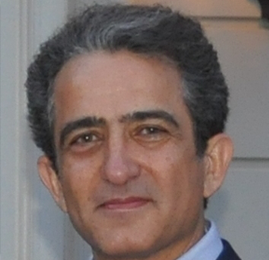
Rafiq Masri
With over 25 years of experience in Information Technology, Rafiq is one of the most accomplished, versatile and certified engineer in the field. He has spent the past 2 ½ decades administering and supporting a wide range of clients and has helped position Network Management, Inc. as a leader in the IT Managed Services space.
Rafiq has built a reputation for designing, building and supporting top notch IT infrastructures to match the business objectives and goals of his clients.
Embracing the core values of integrity, innovation, and reliability, Rafiq has a very loyal client base with some customer relationships dating back 20+ years.
Rafiq holds a bachelor’s degree in Mechanical Engineering from the University of Michigan and has completed graduate programs in Software Engineering and Business at Harvard and George Mason University. Rafiq is a former founder and CEO of Automation, Inc. in Ann Arbor, Michigan as well as a valued speaker on entrepreneurship and technology at industry events such as ExpoTech and others.